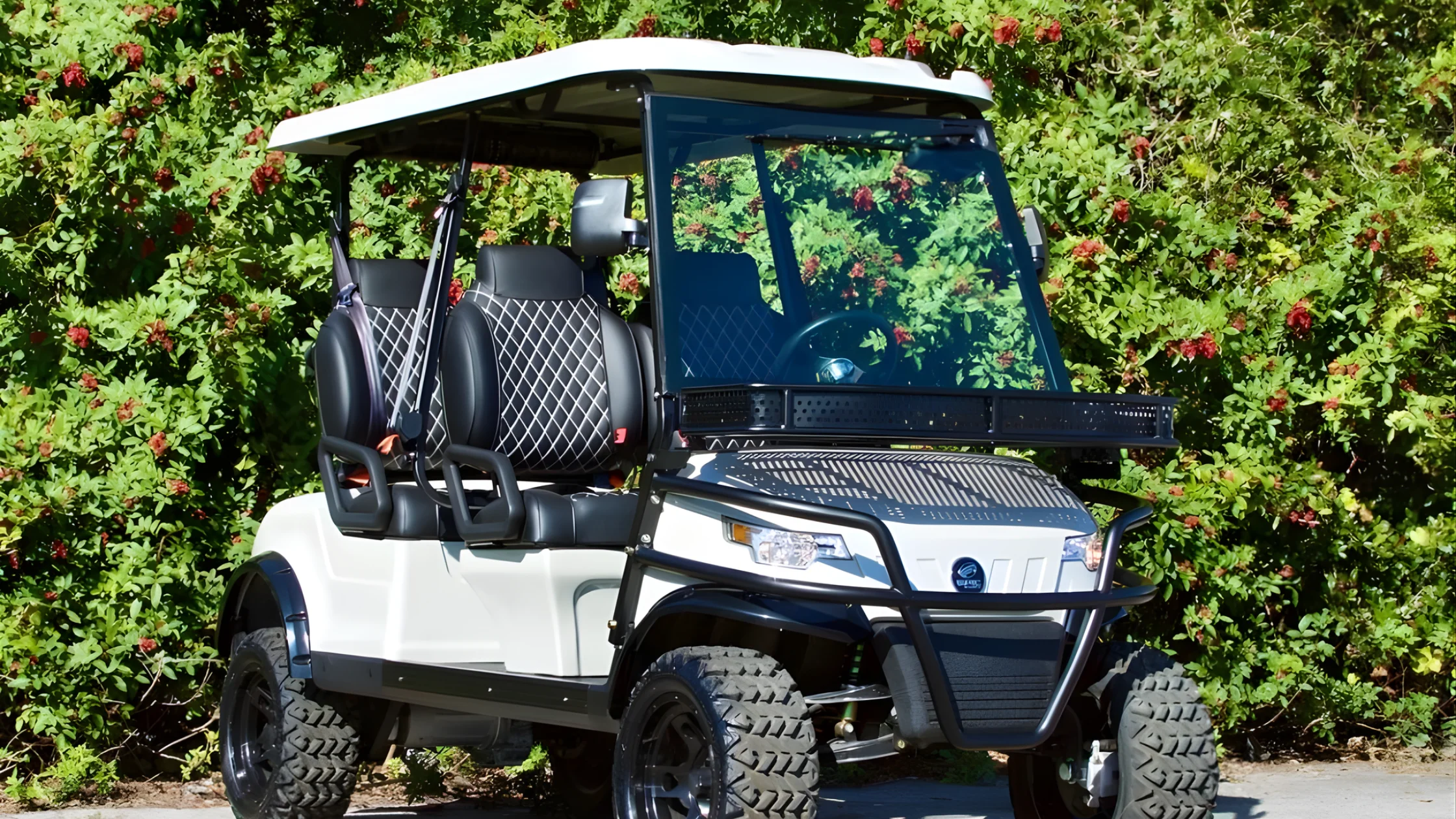
An Epic Golf Cart dealer provides access to electric personal transportation vehicles designed for neighborhood mobility, recreation, property management, hospitality operations, and light utility work. Modern golf carts extend well beyond traditional course transportation through expanded seating layouts, practical cargo solutions, advanced battery systems, and road-oriented equipment. Buyers can compare compact two-passenger carts, four-passenger configurations, extended six-passenger vehicles, lifted designs, and utility-focused models.
Electric golf carts also vary in battery chemistry, motor output, controller calibration, braking hardware, suspension design, tire construction, and onboard technology. These systems influence acceleration, grade performance, charging routines, driving range, passenger comfort, and long-term usability. Vehicle dimensions and equipment can determine how easily a cart fits inside a garage, travels along narrow paths, or carries passengers and supplies.
Epic Golf Cart Dealer Vehicle Categories
Vehicle category is one of the first considerations when selecting a cart through an Epic Golf Cart dealer. Passenger count, cargo requirements, available storage space, terrain, and expected travel frequency all influence the appropriate configuration. A cart used for short community trips may need different equipment from a vehicle assigned to a commercial property or large residential site. Seating arrangements also affect overall length, turning space, weight distribution, and rearward visibility.
Two-Passenger and Four-Passenger Golf Carts
Two-passenger golf carts provide a compact footprint that supports maneuverability on paths, around private property, and within designated community areas. Their shorter body length can simplify parking and garage storage while retaining space for common comfort and technology features. A two-seat configuration may also leave room for a cargo deck, storage compartment, or utility bed, depending on the model.
Four-passenger golf carts add seating for families, guests, work crews, or property staff while remaining more compact than many extended models. Some configurations use forward-facing seats throughout, while others combine front seating with a rear-facing bench. A rear seat may convert into a flat cargo platform on certain vehicles, adding flexibility for occasional equipment transport. The additional seating structure can change vehicle length, center of gravity, and balance when every seating position is occupied.
Six-Passenger and Extended Configurations
Six-passenger golf carts support group transportation in residential communities, campuses, resorts, event locations, and other controlled environments. Their extended wheelbase creates additional seating capacity but also requires more turning room and a larger parking area. A longer vehicle can respond differently during low-speed cornering, reversing, and maneuvering through confined spaces. Acceleration and braking feel may also change when the cart carries occupants in every available position.
The placement of additional seats has a direct effect on occupant movement and weight distribution. Forward-facing configurations can create a more conventional passenger experience, while rear-facing seats may simplify entry in some applications. Extended carts should be evaluated on representative surfaces because pavement transitions, slopes, and tight corners can reveal important handling differences.
Utility and Cargo-Oriented Golf Carts
Utility carts prioritize work functions through cargo beds, enclosed storage, durable seating surfaces, or equipment-carrying provisions. These vehicles can support landscaping, maintenance, property supervision, hospitality operations, and the movement of tools or supplies across controlled areas. Payload limits remain important because occupants, accessories, and cargo all contribute to the total operating load. Materials should remain secured and distributed evenly to preserve predictable steering, braking, and suspension response.
Cargo accessories can increase usefulness, but they also add weight and may extend beyond the original body dimensions. Toolboxes, racks, coolers, carriers, and enclosures should be compatible with the cart’s structure and rated capacity. Poorly positioned cargo can obstruct lighting, mirrors, passenger access, or rear visibility. Heavy items should remain stable during acceleration, braking, and cornering to limit changes in vehicle balance.
Electric Powertrain and Performance Characteristics
Electric propulsion defines much of the operating character associated with a contemporary Epic Golf Cart dealer selection. The battery pack stores energy, the controller regulates its delivery, and the electric motor converts electrical power into movement. These components work together to shape launch response, steady-speed operation, grade capability, and usable driving range. Tire size, occupant load, terrain, temperature, accessory use, and driving technique can alter energy consumption.
Battery Technology and Energy Capacity
Lithium-ion battery systems have become increasingly relevant in the golf cart category because they can provide consistent power delivery and reduced routine maintenance compared with many traditional lead-acid arrangements. Their lower weight can also influence vehicle efficiency, suspension loading, and handling response. Lead-acid batteries remain established within the industry, but they generally require closer attention to charging practices, terminal condition, ventilation, and electrolyte levels in serviceable designs. Battery chemistry can affect vehicle weight, usable capacity, charging behavior, storage procedures, and power delivery under load.
Nominal battery voltage does not provide a complete picture of performance or range. Pack capacity, controller calibration, motor efficiency, vehicle mass, and operating conditions all influence the energy available for travel. Two carts with similar voltage ratings may deliver different acceleration characteristics or travel distances because their complete electrical systems differ. Battery management electronics can monitor temperature, voltage, current, and cell condition on compatible lithium-ion systems.
Charging Requirements and Driving Range
Charging time depends on battery capacity, starting charge level, charger output, temperature, and electrical conditions. A suitable charging location should be dry, ventilated, accessible, and compatible with the equipment specified for the cart. Extension cords and improvised electrical connections can create avoidable risks and should not replace an appropriate charging setup. Owners should inspect cables and connectors regularly for damage, contamination, looseness, or corrosion.
Driving range varies because golf carts encounter changing loads and operating conditions. Repeated inclines, frequent acceleration, larger tires, heavy passenger loads, low tire pressure, and sustained accessory use can increase energy demand. Stop-and-go travel may also produce different consumption than steady operation on level pavement. A battery display or state-of-charge indicator helps the driver monitor remaining energy, but it should be interpreted alongside recent usage and route conditions.
Motors, Controllers, and Low-Speed Response
Electric motor performance involves more than maximum speed. Torque delivery influences how smoothly a cart begins moving, responds on inclines, and maintains progress with passengers or cargo aboard. The electronic controller manages current between the battery and motor, helping define pedal response and acceleration behavior. Controller calibration may also influence regenerative braking, speed management, and power delivery under changing loads.
Maximum operating speed can differ by model, configuration, tire selection, programming, and vehicle classification. Buyers should not assume that every cart offers identical capability or approval for the same operating areas. Lift kits and oversized tires can change effective gearing, steering effort, stability, braking feel, and electrical demand. Added passengers and accessories can further influence acceleration and stopping distance.
Chassis, Comfort, and Functional Design
The chassis and body determine how a golf cart supports occupants, manages surface irregularities, and accommodates everyday equipment. Frame construction, suspension geometry, wheelbase, tire design, seat structure, and body materials all contribute to the operating experience. Two carts with similar exterior dimensions can feel different because of variations in seating position, steering calibration, and suspension tuning. Entry height and roof clearance may also affect usability for passengers with different mobility requirements.
Suspension and Steering Systems
Golf cart suspension commonly uses springs, dampers, axles, or independent components selected for low-speed passenger transportation. The design influences body movement, wheel control, ride comfort, and response over uneven pavement. A cart intended for smooth community streets may use a different setup from a model designed for mixed surfaces or added ground clearance. Suspension condition also affects tire wear, steering consistency, and stability under load.
Steering should feel consistent throughout the intended operating range without excessive free play, binding, or abrupt response. Wheel alignment, tire condition, suspension geometry, and accessory installation can all influence steering behavior. Extended carts may require a wider path through tight corners because of their longer wheelbase. Lifted vehicles can provide additional clearance, but their higher stance may change cornering behavior and passenger entry.
Braking Hardware and Tire Selection
Golf cart braking systems may use mechanical or hydraulic components, with equipment differing across designs and classifications. Certain electric carts can also use regenerative braking, which allows the motor to help slow the vehicle and recover a portion of its energy. Regenerative operation supplements the primary braking system and does not remove the need for properly maintained service brakes. Pedal feel, stopping response, and parking brake operation should be checked during a vehicle evaluation.
Tire construction affects traction, steering precision, ride quality, energy consumption, and braking performance. Street-oriented tires, turf-conscious designs, and more aggressive tread patterns each suit different surfaces and operating priorities. Proper inflation supports predictable handling and limits unnecessary rolling resistance. Oversized tires may alter vehicle height, clearance, acceleration, and speedometer accuracy on carts equipped with a speed display.
Seating and Weather Protection
Seat cushioning, backrest shape, legroom, step placement, and handhold location can significantly affect passenger comfort. Wider seating areas may provide additional space, while contoured designs can offer greater support during turns. Upholstery materials should suit the cart’s storage conditions and expected exposure to sun, moisture, dirt, and frequent use. Roof panels provide overhead coverage, but passengers remain exposed at the sides unless the vehicle uses an enclosure or similar weather equipment.
Windshields may use fixed, folding, or divided designs that affect airflow, visibility, and cleaning access. Tinted or coated panels can influence visual clarity under changing light conditions, so direct inspection remains important. Full or partial enclosures can provide additional protection from wind and rain but may change ventilation and access to controls. Weather equipment should not obstruct mirrors, lighting, passenger movement, or driver sightlines.
Technology, Safety, and Ownership Planning
Technology systems can make an electric golf cart easier to monitor and operate when their controls are clear and logically arranged. Digital displays may present speed, direction, battery status, mileage, lighting information, or system alerts. USB ports and other power connections can support personal devices, although accessory use draws energy from the electrical system. Lighting, mirrors, turn signals, and audible warning devices may improve communication and visibility in shared environments.
Displays, Controls, and Electrical Accessories
A clear instrument display helps drivers monitor vehicle status without unnecessary distraction. Battery information is particularly useful because remaining charge can change according to recent load, terrain, and driving conditions. Direction selectors, lighting switches, drive-mode controls, and parking brake functions should be easy to identify from the normal seating position. Buyers should test these controls while seated rather than judging their placement from outside the cart.
Electrical accessories can include charging ports, audio equipment, illuminated storage, fans, and additional exterior lighting. Each accessory adds demand to the vehicle’s electrical system and may affect energy consumption during extended use. Installation should use compatible components, secure wiring, suitable circuit protection, and weather-resistant connections. Cables should remain protected from moving parts, sharp edges, passenger footwells, and cargo areas.
Visibility and Occupant Protection
Headlamps, taillamps, brake lamps, turn signals, reflectors, and mirrors can improve awareness during daytime and low-light operation. The presence of this equipment does not automatically qualify a cart for use on every public road. Local requirements may address registration, identification, speed capability, occupant restraints, approved road types, and licensed driver status. Owners should confirm the rules that apply to each intended route before operating beyond private property. Visibility equipment should remain clean, correctly positioned, functional, and unobstructed after accessories are installed.
Seat belts, grab handles, footrests, and secure seating surfaces can support occupant protection when used correctly. Drivers should keep passengers seated, prevent arms and legs from extending beyond the body, and reduce speed before turns or rough surfaces. Backup cameras or parking sensors may assist rearward awareness on equipped carts, but direct observation remains necessary. Windshield frames, roof supports, rear passengers, and cargo can change sightlines during maneuvering.
Maintenance and Long-Term Usability
Electric golf carts require routine inspection even though their powertrains contain fewer service items than many combustion-powered vehicles. Owners should monitor tires, brakes, steering, suspension, lighting, electrical connections, charging equipment, and battery condition. Coastal humidity, rain, airborne salt, heat, and prolonged sunlight can increase the importance of cleaning and protected storage. Corrosion should be addressed promptly, and electrical connectors should remain dry, clean, and secure. Manufacturer procedures should guide inspection intervals, approved parts, battery care, and storage practices.
Long-term usability also depends on choosing the appropriate cart at the beginning of ownership. Buyers should measure garage access, verify charging availability, estimate normal passenger and cargo loads, and identify the surfaces the vehicle will encounter. Roof height, windshield configuration, rear-seat orientation, and parking space should also be included in the evaluation. A properly structured test drive can reveal differences in pedal calibration, steering effort, ride quality, braking feel, and seating comfort.
Visit Icon Golf Carts to Schedule a Test Ride
Our team can help you compare passenger layouts, electric powertrain characteristics, comfort features, technology, and utility configurations in a focused setting. Visit Icon Golf Carts in Sarasota, FL, to discuss how different golf cart categories may fit your expected routes, passenger needs, storage space, and charging routine. We encourage shoppers to inspect seating access, controls, cargo provisions, visibility, and overall dimensions before selecting a vehicle. Our team can also arrange a test ride so you can assess relevant operating characteristics and compare suitable configurations. Contact us to plan your visit and begin a detailed evaluation of your next electric golf cart.
Back to Research Pages