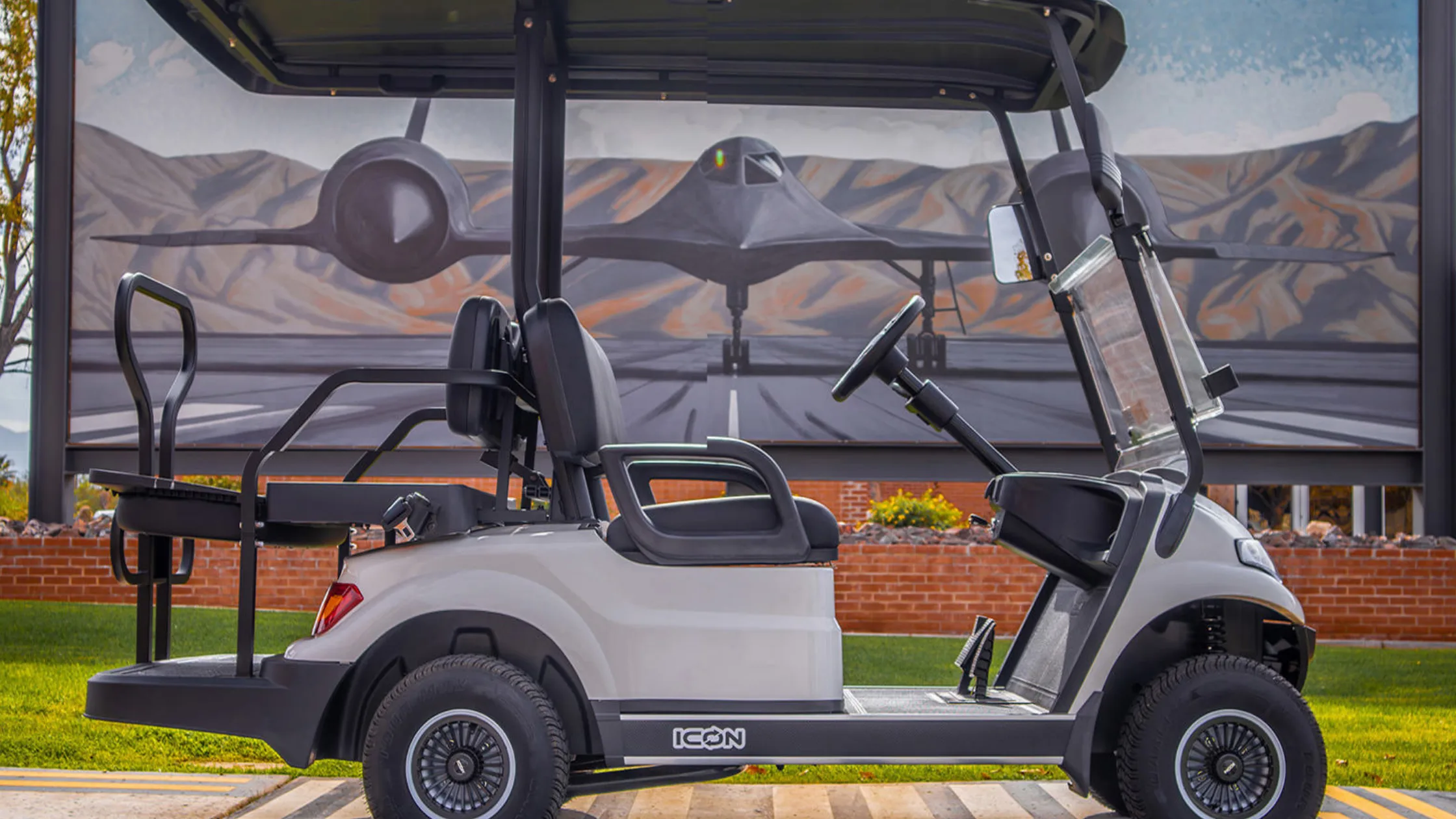
An Icon Golf Cart Dealer provides a focused resource for buyers comparing electric golf carts for neighborhood transportation, recreation, property management, community travel, and other low-speed applications. Modern Icon Golf Carts extend beyond traditional course-oriented designs by combining electric propulsion with multiple seating arrangements, automotive-inspired controls, road-use equipment, and distinct chassis configurations. Buyers can compare two-passenger, four-passenger, and six-passenger vehicles, along with lifted and non-lifted designs developed for different surfaces and transportation needs. Battery chemistry, motor operation, braking hardware, suspension tuning, tire selection, passenger capacity, and charging access all influence the suitability of a particular cart.
Icon Golf Cart Dealer Vehicle Categories
An Icon Golf Cart Dealer can help buyers understand the differences among several vehicle categories rather than directing every customer toward one universal design. Compact carts prioritize maneuverability and efficient use of storage space, while extended configurations provide additional seating for families, guests, employees, or residents. Lifted vehicles add ride height and larger tires, creating different clearance, entry, and handling characteristics from standard-height models. Rear-facing seat assemblies can expand passenger capacity and may provide limited cargo flexibility when equipped with a convertible platform.
Two-Passenger Icon Golf Carts
Two-passenger golf carts provide a compact layout for owners who typically travel alone or with one passenger. Their shorter body length can simplify parking, garage storage, tight turns, and travel through narrow lanes or property paths. A reduced passenger capacity may also leave the cabin controls and entry points relatively straightforward to access. Buyers should still inspect legroom, seat support, step height, storage areas, and the position of the steering wheel and pedals.
Four-Passenger Seating Configurations
Four-passenger Icon Golf Carts generally add a second seating area while retaining dimensions suitable for many residential and recreational settings. Some configurations use forward-facing seating throughout the cabin, while others incorporate a rear-facing bench behind the primary seats. A rear-facing assembly may include a folding base that converts into a platform for carrying light items when no passengers occupy that area. Seating direction affects passenger access, outward visibility, body length, and weight distribution.
Six-Passenger and Extended Models
Six-passenger golf carts support transportation tasks that exceed the capacity of a traditional two-row vehicle. These extended designs can move larger groups through planned communities, campuses, resorts, event properties, and other controlled environments. A longer wheelbase changes turning behavior, parking requirements, breakover clearance, and overall storage dimensions. Added passengers also increase vehicle weight, which can influence acceleration, braking distance, steering response, and energy consumption.
Lifted and Non-Lifted Designs
Lifted Icon Golf Carts combine increased ride height with larger tires and a taller driving position. The additional clearance may be useful on uneven private paths, driveway transitions, maintained trails, or properties with changing surface conditions. A lifted chassis can also produce a higher step-in point and different cornering behavior because the vehicle carries its occupants farther from the ground. Non-lifted carts generally support easier entry, a lower center of gravity, and dimensions that may fit more readily into garages or enclosed storage areas.
Electric Propulsion and Battery Technology
Electric propulsion shapes the operating character of every Icon golf cart by delivering quiet movement and direct response at low speeds. The propulsion system typically integrates a traction motor, electronic controller, battery pack, charging equipment, and drive components designed to work as a coordinated unit. Passenger load, tire diameter, road grade, temperature, accessory use, and driving style can influence acceleration and usable travel distance. Battery state of charge also affects trip planning when the cart completes several journeys during the same day.
Electric Motor and Controller Operation
The traction motor converts stored electrical energy into rotational force that moves the golf cart. An electronic controller regulates power delivery according to accelerator input, vehicle speed, operating load, and programmed system limits. Predictable controller calibration can make low-speed maneuvering smoother in parking areas, driveways, shared paths, and pedestrian-oriented settings. Larger tires, steep grades, added accessories, and a full passenger load place greater demand on the propulsion system.
Lithium Battery Characteristics
Lithium battery systems provide several ownership advantages when compared with traditional flooded lead-acid designs. They generally require less routine battery maintenance because owners do not need to monitor and replenish liquid electrolyte. Lithium packs can also deliver relatively consistent power through a broad portion of the usable charge cycle. Integrated battery management electronics monitor operating conditions and regulate charging and discharging activity within defined limits.
Charging Access and Operating Range
Charging convenience begins with a suitable electrical connection located near the cart’s normal parking space. The charging unit and related cables should remain protected from water intrusion, impact, excessive strain, and conditions outside their intended operating limits. Consistent charging habits help prepare the vehicle for routine transportation without requiring frequent schedule changes. Usable range varies because repeated acceleration, heavy passenger loads, hills, larger tires, temperature, and electrical accessories increase energy consumption.
Performance Under Changing Loads
Passenger and cargo weight have a direct effect on electric golf cart performance. A heavily loaded vehicle may accelerate more gradually and require additional distance to slow, particularly on a grade. Tire size and tread design can further influence rolling resistance, steering effort, ride quality, and battery use. Repeated stop-and-go operation also consumes energy differently from steady travel at a moderate speed.
Chassis, Braking, and Operating Equipment
The chassis systems of an Icon golf cart determine how the vehicle carries passengers, responds to steering input, absorbs surface changes, and slows under varying loads. Frame construction, suspension geometry, brake design, wheel dimensions, and tire selection operate together to shape ride and handling characteristics. Models intended for community transportation may also include lighting, mirrors, seat belts, and other equipment associated with low-speed vehicle operation. The presence of this equipment does not automatically authorize operation on every public road or within every jurisdiction.
Suspension and Ride Control
Suspension components manage wheel movement and reduce the amount of surface disturbance transferred to the passenger compartment. Spring rates and shock absorber tuning must balance occupant comfort with body control, especially when a vehicle carries several passengers. Extended and lifted golf carts can respond differently from compact standard-height models because wheelbase, ride height, tire size, and weight distribution affect handling. Tire pressure also influences ride firmness, steering response, tread wear, rolling resistance, and directional stability.
Steering and Maneuverability
Steering behavior depends on vehicle length, wheelbase, tire construction, alignment, and the condition of front suspension components. A compact two-passenger cart will generally require less space to turn and park than an extended six-passenger configuration. Lifted models with larger tires may deliver a different steering feel from standard-height vehicles with road-oriented tires. Drivers should check forward visibility, mirror coverage, steering effort, and turning clearance during a product evaluation.
Braking and Deceleration
Reliable braking performance becomes increasingly important when a golf cart carries multiple passengers or travels on routes with frequent intersections and slopes. Mechanical service brakes provide the primary stopping force, while some electric drive systems may contribute regenerative braking or motor resistance during deceleration. The strength and feel of regenerative operation can vary with vehicle speed, battery condition, and system calibration. Drivers should become familiar with pedal response and stopping distance before operating with a full passenger load.
Lighting and Occupant Equipment
Automotive-inspired equipment can improve visibility, communication, and occupant usability during community or neighborhood transportation. Headlights, taillights, brake lights, turn signals, mirrors, a horn, and seat belts may be relevant to a golf cart prepared for operation beyond private property. Windshields can provide additional protection from airflow and debris, while wipers and other components may be associated with specific vehicle classifications or local requirements. Each installed component should be inspected periodically for secure mounting, visible damage, and correct operation.
Comfort, Controls, and Ownership Considerations
Cabin design influences how effectively an Icon golf cart supports repeated entry, passenger travel, and routine operation. Seat construction, legroom, step height, control placement, display visibility, storage, and weather protection contribute to daily usability. Clear instrumentation helps the driver monitor basic operating information without creating unnecessary distraction. Accessory selection should address a defined functional need and remain compatible with the electrical and structural capacity of the vehicle.
Seating and Passenger Usability
Supportive seating and a natural driving position can improve comfort during repeated short trips through residential, recreational, or commercial properties. Drivers should confirm that the steering wheel, accelerator, brake pedal, direction selector, and parking controls remain easy to reach from a normal seated position. Passenger grab handles, stable footrests, and secure entry surfaces can provide additional support during boarding and travel. Rear passengers should have adequate space for their feet and a clear understanding of the seating position, particularly when using a rear-facing bench.
Displays and Driver Controls
A digital display may present speed, battery charge, trip information, warning indicators, or other operating data depending on the model and equipment package. The screen should remain visible from the normal driving position under the lighting conditions expected during regular use. Switches for lights, turn signals, drive direction, and other functions should be clearly arranged and easy to identify. Drivers should learn the meaning of warning symbols before routine operation so they can respond appropriately to system notifications.
Storage and Accessory Integration
Golf carts provide limited enclosed cargo space, making storage planning an important part of vehicle selection. Dash compartments, under-seat areas, rear platforms, locking boxes, and holders can support different transportation tasks depending on the body configuration. Enclosures, audio components, auxiliary lighting, fans, and charging ports add weight and may increase electrical demand. Large accessories can also affect overall dimensions, passenger access, rear visibility, or vehicle clearance.
Inspection and Routine Care
Routine golf cart care begins with checks of tire pressure, tread condition, steering response, brake operation, lighting, and battery charge status. Owners should also inspect visible wiring, connectors, suspension components, fasteners, seat mounts, and body attachments for looseness or damage. Cleaning materials should be appropriate for exterior panels, upholstery, displays, windshields, wheels, and electrical areas. A cart stored for an extended period may require specific charging and battery procedures based on its battery chemistry and installed equipment.
Visit Icon Golf Carts for a Test Ride
Visit Icon Golf Carts in Sarasota, FL, to compare passenger configurations, chassis designs, driver controls, and electric propulsion features in person. Our team can help you assess seating capacity, entry height, storage needs, charging access, and the types of routes you plan to travel. We can also explain the practical differences among compact, extended, lifted, and non-lifted Icon Golf Carts without adding unnecessary complexity to the selection process. Contact us to request vehicle information or schedule a test drive that fits your availability. A direct evaluation can provide useful insight into steering response, braking feel, seating comfort, visibility, and low-speed maneuverability.
Back to Research Pages